
The Meta Title: A crucial SEO element!
19 September 2023Have you ever wondered why some websites appear high in search results while others get lost in the digital wilderness? The answer can partially be found in a small but powerful piece of text called the meta title. In this blog, we dive into the world of the meta title, covering both the basics and the technical sides.

What is a Meta Title?
Let's start with the basics. A meta title is like the business card of your website on the internet. It is a short sentence that tells what a page is about. Imagine it as the title of a book - it's the first thing people see before deciding whether to continue reading (in other words, clicking) or not.
Why is a Meta Title so important?
Now, why is this small piece of text so crucial? The answer lies in the world of SEO (Search Engine Optimization) and search engines like Google. The meta title is what search engines use to understand what your page is about. For example, if someone searches for "a company that can build a website," you expect the meta title of a page on that topic to say something like "Looking for an effective and creative website?" This makes it clear to users that they will likely find what they are looking for if they click that link.
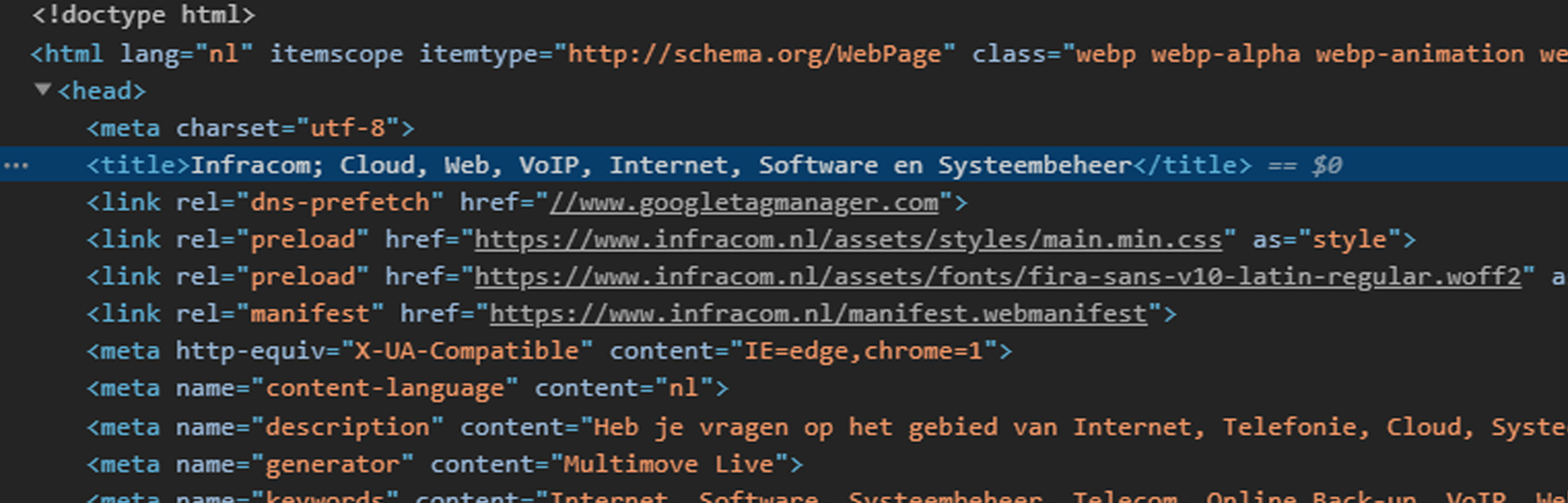
How do you write a good Meta Title?
Here are some steps to write an effective Meta Title:
- Keep it short and sweet
The ideal length for a meta title is between 50 and 60 characters. This ensures the meta title is fully displayed in search results without being cut off. Long meta titles can look messy and be less effective. - Put important keywords first
Place the most relevant keywords for the page at the beginning of the meta title. This helps search engines and users quickly understand what the page is about. - Make it unique
Ensure that every page on your website has a unique meta title. Repeated meta titles can lead to confusion for search engines and users. - Make it relevant
The meta title must accurately reflect what the page is about. It should summarize the content of the page and match user expectations. - Make it attractive
A good meta title should not only be informative but also attractive enough to encourage users to click the link. Use words that spark curiosity or promise a benefit. Use brand names wisely: If you have a well-known brand, it can be useful to add the brand name at the end of the meta title. This can build trust with users who recognize your brand. - Avoid double quotes
Use single quotes or no quotes at all in your meta title. Some search engines may encounter problems with double quotes. - Avoid excessive use of special characters
Use special characters like vertical bars (|), hyphens (-), and dashes (-) sparingly and only when they are relevant to the content.
In short, the meta title is a crucial SEO element that affects the visibility and relevance of a web page in search engines. It is essential to follow the guidelines regarding length, uniqueness, relevant keywords, and informative attractiveness to achieve the best possible results in search rankings. It should be short, unique, and contain relevant keywords.
Remember that meta titles are not just for search engines, but also for users. They must be both informative and attractive to generate clicks and improve the user experience.
Conclusion: ensure your own online success!
At Infracom, we strongly believe in the power of self-management and control over your online presence. Our approach to designing and developing websites offers you the opportunity to influence the findability of your website in search engines yourself.
You get the tools to take the reins yourself and make your website appear high in the search engines. We strive to provide user-friendly content management systems (CMS), with which you can easily manage and optimize the content of your website for search engines.